
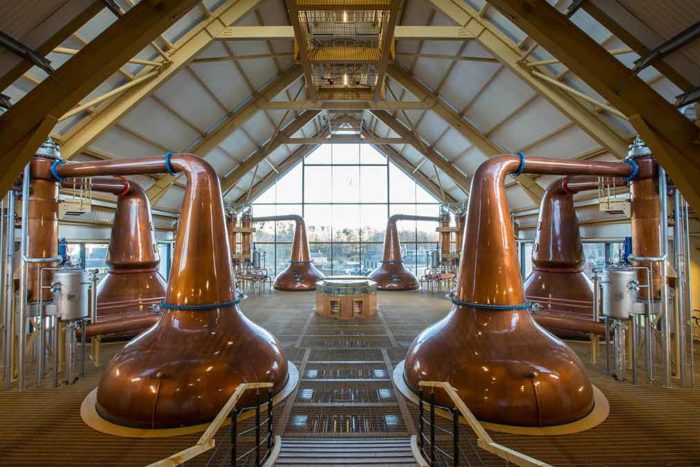
Water scarcity is no longer a hypothetical issue for Scottish distilleries. Recent research from Scotland’s Centre of Expertise for Waters (CREW) highlights a clear trend towards more frequent and prolonged low river flow events due to climate change with knock-on risks for ideal production conditions, stability, resilience, costs, regulatory compliance….. the list goes on and on.
In these water-intensive industries such as distilling water is used at multiple sections throughout the process from mashing and fermentation through to cooling in condensers and heat rejection systems.
Among these, cooling systems offer the biggest immediate opportunity to reduce water use and operating cost without major process redesign. Upgrading or re-specifying cooling infrastructure (e.g., modern adiabatic coolers, controlled cooling towers, and smart control regimes) can cut water consumption significantly even by up to 90% whilst improving energy efficiency, and enhancing plant resilience.
The Water Scarcity Context for Scottish Distilleries
The CREW study outlines that future climate projections (to 2049 and beyond) show:
- Reduced summer and early autumn rainfall, especially across Eastern and Northern Scotland, where many malt whisky distilleries abstract surface water from rivers such as the Spey and Dee.
- Doubling of low river flow events by mid-century if current climate trends continue, raising the likelihood of abstraction restrictions and production interruption.
- Water scarcity will impact not only raw input water but also heat rejection systems reliant on evaporative water use.
Distilleries are already responding with water-efficiency planning, storage buffers and improved abstraction practices. However, optimisation of cooling infrastructure remains one of the most cost-effective and impactful measures.
Cooling Systems: Where the Water Use “Low-Hanging Fruit” Lives
Distilleries typically reject heat from condensers and process cooling duties via:
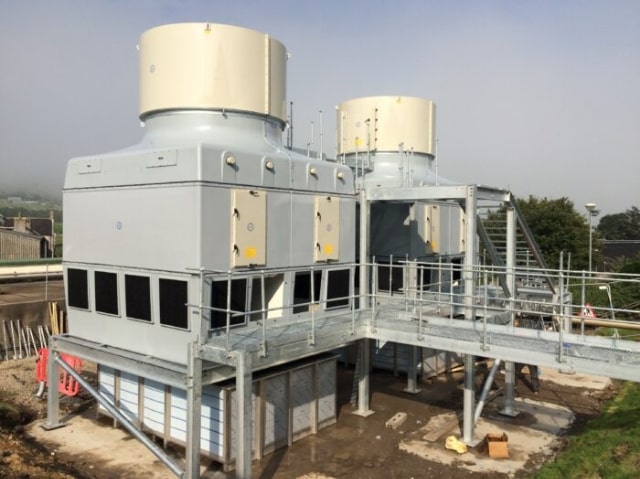
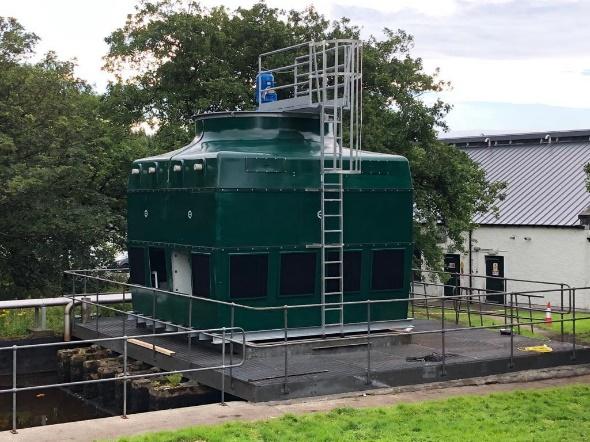
- Traditional evaporative cooling towers
- Closed-loop chillers
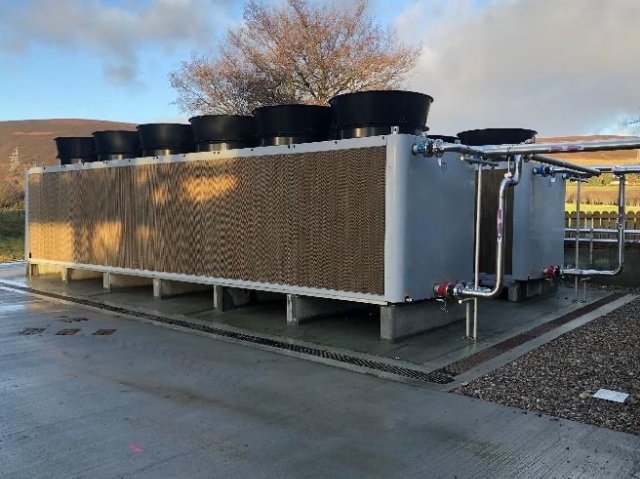
- Dry or adiabatic coolers
Each technology has a distinct water, energy, and operating cost profile:
Water Use and Cooling Technology Trade-offs
| System Type | Water Use | Key Benefits |
|---|---|---|
| Evaporative Cooling Tower | High (significant make-up/blow-down water losses due to evaporation) | Good for large duties; low capital cost |
| Adiabatic Coolers | Very Low (up to ~90% less vs towers) | Big water saving, better energy performance in moderate climates |
Adiabatic coolers combine dry cooling with limited water trickle or spray when required, dramatically reducing water consumption compared with conventional towers often leading to a 30–90% saving on make-up water.
This is particularly relevant for distilleries in water-constrained catchments and for sites where abstraction licences may tighten over time.
Other Operational Benefits of Upgrading Cooling Systems
1. Reduced Energy Consumption
Modern cooling solutions and controls can improve thermal efficiency and reduce fan & pump energy use cutting a sites total electricity costs and carbon emissions drastically.
2. Lower Maintenance & Compliance Overheads
Older towers often harbour biofilm and scale that drive the requirement for frequent cleaning, water treatment dosing chemicals and cause a real Legionella risk. Newer designs (EWK included) with evaporative panel coolers avoid wet coil contact, reducing corrosion, maintenance and eliminating legionella as a risk factor.
3. Predictable Cooling Under Constraint
Smart control systems enable scheduling and modulation of cooling output based on duty and ambient conditions crucial when water availability cycles through scarcity alerts.
4. Aligns with Distillery Sustainability Goals
Cutting water consumption in heat rejection aligns with net-zero and sustainability targets now common in distillery ESG reporting.
Your solid takeaways….
Water scarcity is an industrial risk driver in Scotland for distillers. CREW research highlights future pressures on water resources that could affect production continuity & resilience.
Upgrading or optimising cooling systems specifically through water-efficient technologies such as adiabatic coolers and smart controls should be prioritised by operators. These investments deliver measurable water savings, lower operating costs, reduced energy use, and improved resilience, constituting a decisive first step in broader water management strategy.