
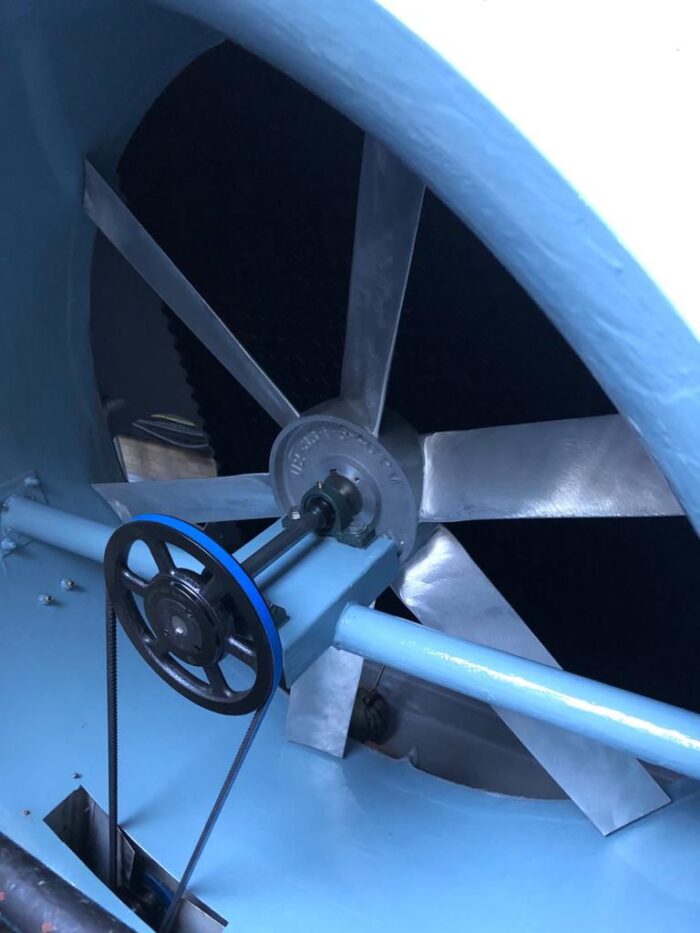
Cooling towers and adiabatic coolers are often treated as passive utilities, yet are expected to run indefinitely with minimal intervention. In reality, they are mechanical systems, all of which fail due to corrosion, operational stressors or operator error (it does happen yes….) . These systems often have long replacement lead times, and a direct link to production uptime something all UK manufacturing companies hold dear.
For UK manufacturing sites, the question is not whether components such as fans, motors, fill or drift eliminators will need replacement, but when and whether the site is prepared for when that moment arrives…..
This article explains:
- What constitutes critical vs non‑critical spares for cooling towers and adiabatic coolers
- Why lead times, not component cost, usually drive downtime risk
- How modest on‑site storage can materially improve resilience
- A real UK case study using an EWK 1800/09 cooling tower
- How engineering teams can justify upfront spares planning against outage exposure
The intent is practical: to help engineering and maintenance managers make defensible, low‑regret decisions about spares strategy to their finance team!
Why Cooling System Resilience Is Usually Under‑Engineered
On most sites, cooling towers and adiabatic coolers sit outside the production hall. They are visible, noisy, and assumed to be robust.
This often leads to a familiar mindset:
“If it fails, we’ll just replace it.” – an all too common thought…
The problem is that cooling tower components are not consumables in the same way as pumps, valves or instrumentation. Many are:
- Model‑specific
- Project‑manufactured
- Sourced from overseas OEMs
- Subject to long and variable lead times
When a failure occurs, the commercial exposure is rarely the component cost. It is the lost production, process disruption, and recovery risk while waiting weeks or months for parts.
Resilience, therefore, is not about over‑engineering the asset. It is about engineering the spares strategy.
Defining Critical vs Non‑Critical Spares
Not all spares justify being held on site. The distinction is driven by time to recover, not theoretical importance.
Critical spares
Critical spares are components where failure results in immediate or near‑immediate loss of cooling duty, with no viable workaround. Something that we experience as… MAYDAY, MAYDAY, MAYDAY could we have a replacement fan here yesterday – not cool!
For cooling towers and adiabatic coolers, these typically include:
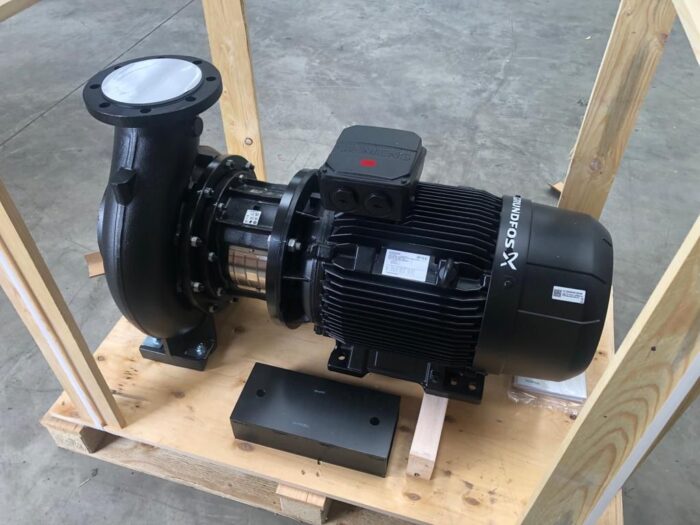
- Fan motors (direct drive or geared)
- Axial impellers/fan assemblies
- Spray nozzles and distribution components
Failure of either usually means:
- Tower unavailable
- Process temperatures rise rapidly
- Production curtailment or shutdown
If the lead time for replacement exceeds the site’s tolerance for outage, the spare is functionally critical, regardless of replacement cost.
Non‑critical (but strategic) spares
Non‑critical spares are components that:
- Degrade over time rather than fail instantly
- Can be temporarily managed or deferred
- Do not usually cause immediate loss of duty
Examples include:
- Heat‑transfer fill / packing
- Drift eliminators
- Inlet louvres
- Spray nozzles and distribution components
These parts are often planned for replacement on a 2–5 year horizon. However, deferring their availability entirely still introduces risk, particularly where:
- Access windows are limited
- Shutdowns are infrequent
- Lead times overlap with peak production periods
Cooling Tower Spare Parts Lead Times: The Hidden Downtime Risk
In spares discussions, cost is often the visible number. Lead time is the invisible one.
Typical industry lead times (illustrative):
- Fan motors: 6–12 weeks (longer if non‑stock or high power)
- Axial impellers: 8–16 weeks
- Fill, drift eliminators, louvres: 6–10 weeks
- Bespoke pack sets: project‑manufactured, not shelf items
These timelines assume:
- OEM availability
- No manufacturing bottlenecks
- No transport disruption
In reality, lead times can and do extend.
For an engineering manager, the relevant question is simple:
“Can the site tolerate being without cooling for this long?”
If the answer is no, the spare should be planned – not debated.
Case Study: EWK 1800/09 Spares Strategy (UK Industrial Site)
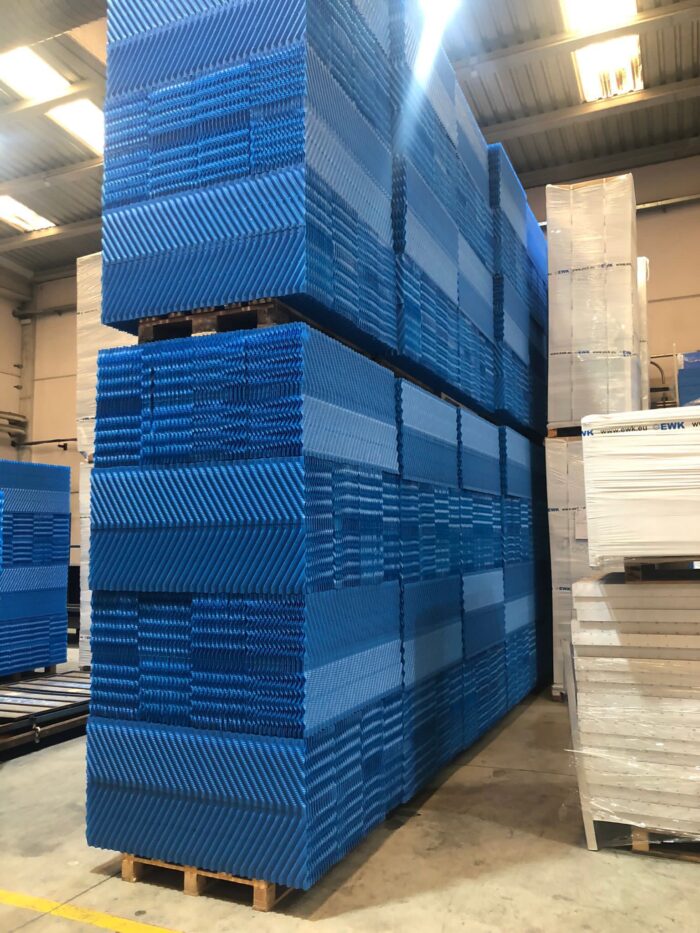
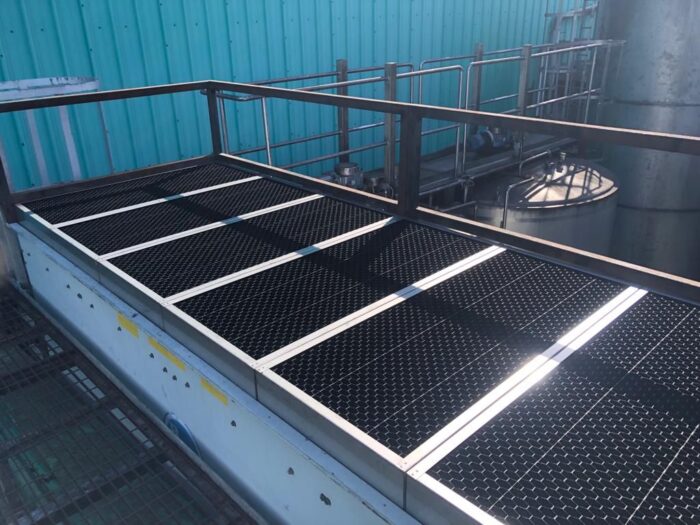
A recent UK project involved the supply of an EWK 1800/09 cooling tower, with associated packing, drift eliminators and inlet louvres.
Identified spares
The spares package was deliberately split:
- Critical mechanical spares: motor and axial impeller
- Maintenance / non‑critical spares: fill, drift eliminators, louvres
The client classified the heat‑transfer materials as non‑critical, with anticipated replacement in the next 2–5 years, but recognised that procurement lead time would likely exceed any future shutdown window.
Storage reality
A common objection was space.
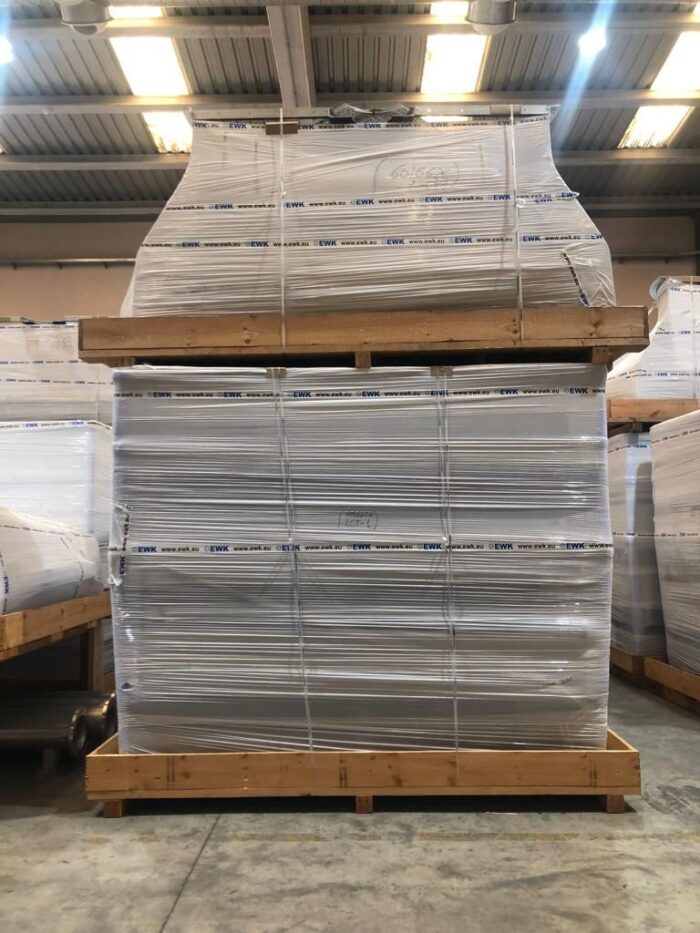
The actual storage requirement for the non‑critical spares was approximately:
- 17.5 m³ total volume
- Distributed across six pallets
Indicative pallet breakdown:
- 4 pallets at 1.2 × 1.2 × 2.6 m
- 1 pallet at 2.4 × 1.2 × 2.0 m
- 1 pallet at 1.35 × 0.45 × 0.7 m
In practical terms, this equated to a small number of racking bays or a defined area of covered storage.
Set against the prospect of weeks of cooling system outage, the trade‑off was straightforward.
Storage vs Outage: A False Trade‑Off
Spares storage is often framed as a burden:
- “We don’t have the space.”
- “We’ll deal with it when needed.”
This comparison is misleading.
The real trade‑off is not storage vs nothing. It is:
- Modest, predictable storage
versus
- Unpredictable, extended loss of cooling capacity
For most UK industrial sites, a few cubic metres of protected storage is far easier to justify than:
- Emergency rental cooling
- Forced production outage
- Unplanned shutdowns
- Reputational and contractual exposure
Integrating Spares into Maintenance Planning
One way clients manage this risk is by integrating selected spares into a structured maintenance approach.
Rather than holding everything ad‑hoc, sites may:
- Define a critical spares list aligned to outage tolerance
- Identify non‑critical components due within the next asset cycle
- Align procurement with bi‑annual mechanical inspections
This allows:
- Condition‑based decisions
- Controlled cash flow
- Reduced emergency intervention
The key is intent: spares are planned as part of system ownership, not as an afterthought.
If you would like an objective assessment of which cooling tower spares are genuinely critical for your site, we can review your system and outage tolerance.