
Cooling towers are core operational assets in industrial and manufacturing operations. When a tower starts leaking, the impact quickly extends to system reliability, energy performance, water use, chemical consumption and regulatory compliance. Although leaks may seem minor, they are often early warning signs of structural degradation or failing mechanical components — and they rarely fix themselves.
This guide provides a clear framework to help facilities managers, engineers and duty holders identify the root causes of cooling tower leakage, compare refurbishment methods including GRP lining, and understand when full tower replacement is the most reliable and cost-effective option.
📋 Quick Diagnosis: What Type of Leak Do You Have?
- Water pooling around the base → Likely basin corrosion or joint seal failure
- Visible rust staining on external casing → Galvanised steel pitting or coating failure
- Water level dropping without increase in use → Internal crack, perforation or sump breach
- Leak worsening after maintenance → Structural degradation — a Vistech survey is recommended
Understanding Why Cooling Towers Leak
Leakage occurs when the water-retaining components — the cold-water basin, casing walls, joints or sump — lose their structural integrity. The four most common root causes are:
1. Corrosion of Metal Surfaces
Galvanised or mild steel casings, even when factory-coated, are vulnerable to continuous exposure to oxygen, moisture and treatment chemicals. Over time, this leads to pitting, thinning and eventual perforation.
2. Coating Degradation
Legacy epoxy, polyurethane or bitumen-based coatings crack, peel or delaminate with age. Water then migrates behind the coating, accelerating corrosion from within.
3. Joint, Seal and Panel Failure
Modular towers rely on mastics and seals between bolted panels. These degrade with thermal cycling and vibration — particularly at cold-water basin corners and sump connections.
4. Water Chemistry & Neglected Maintenance
Improper water treatment or irregular inspection significantly increases corrosion rates. Neglecting cooling tower maintenance is a leading contributor to premature structural failure.
Metal Cooling Towers vs GRP Moulded Construction
Progressive corrosion in metal cooling towers leads to structural degradation, leakage and ongoing repair cycles.
GRP moulded construction towers eliminate these failure modes through inherently corrosion-resistant materials
and integrated water-retaining structures.
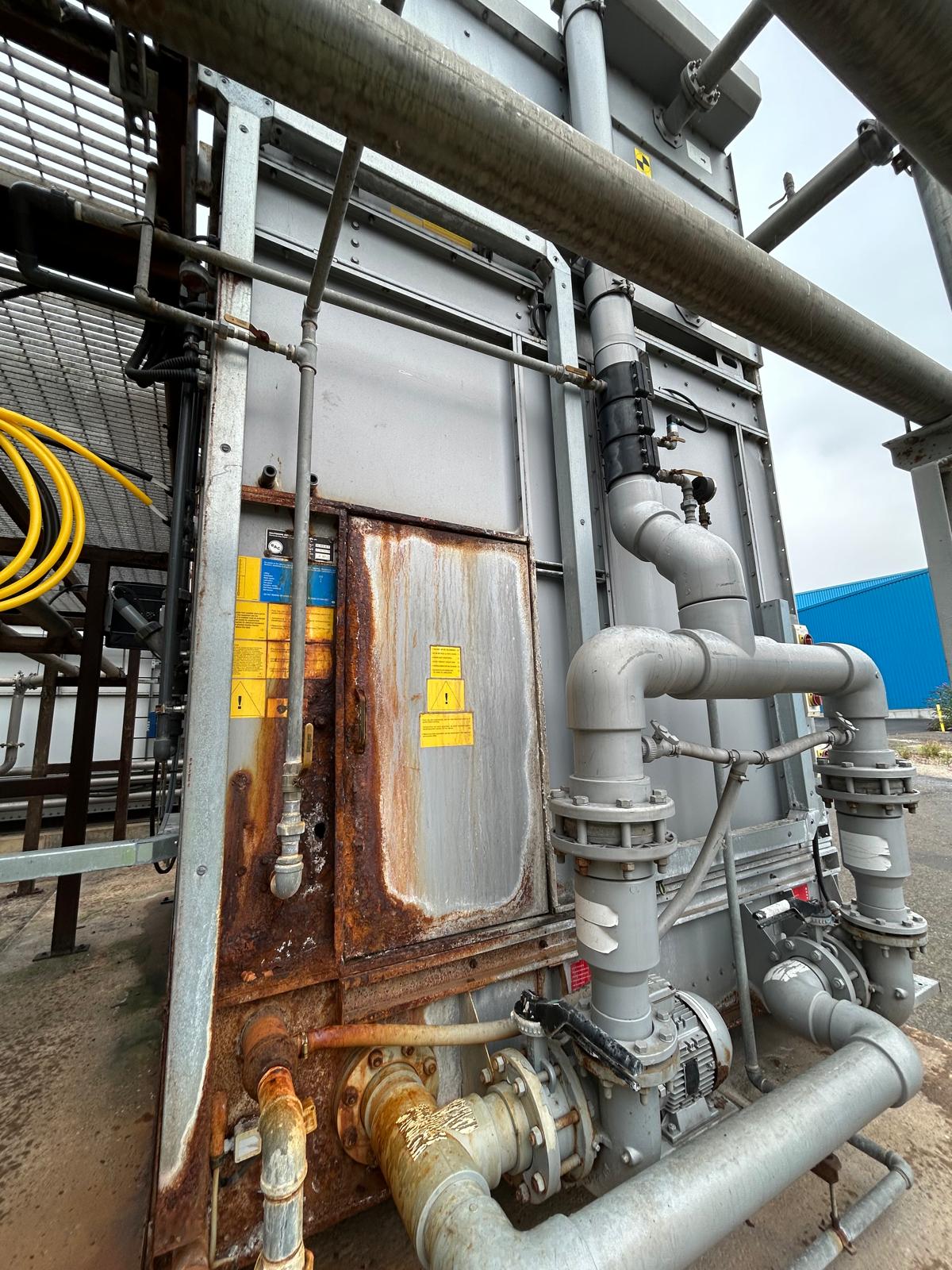
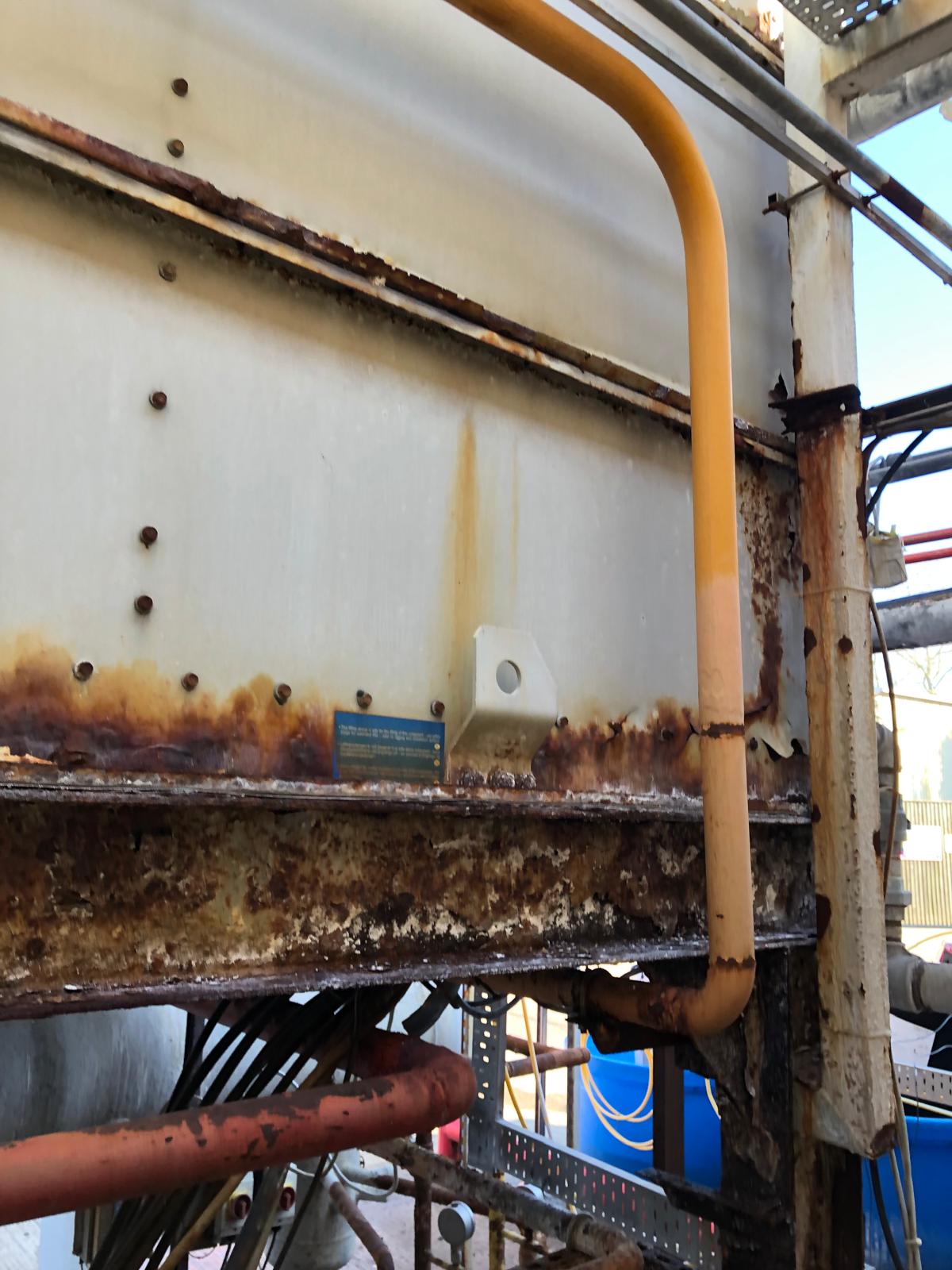
Metal Tower Construction
- Corrosion, pitting and material thinning over time
- Protective coatings degrade and fail
- Leaks develop at joints, seams and basins
- Ongoing repair, lining and patching required
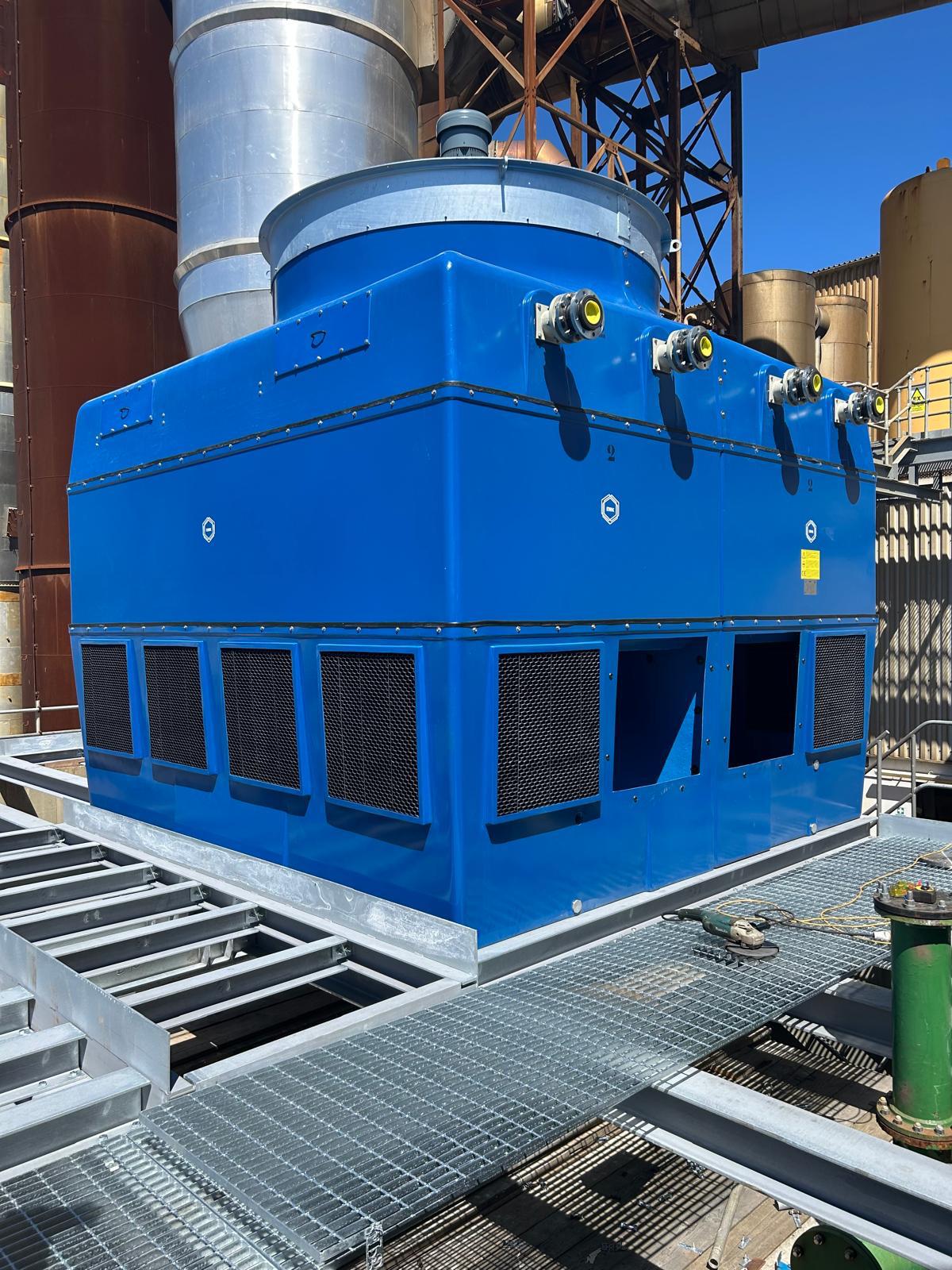
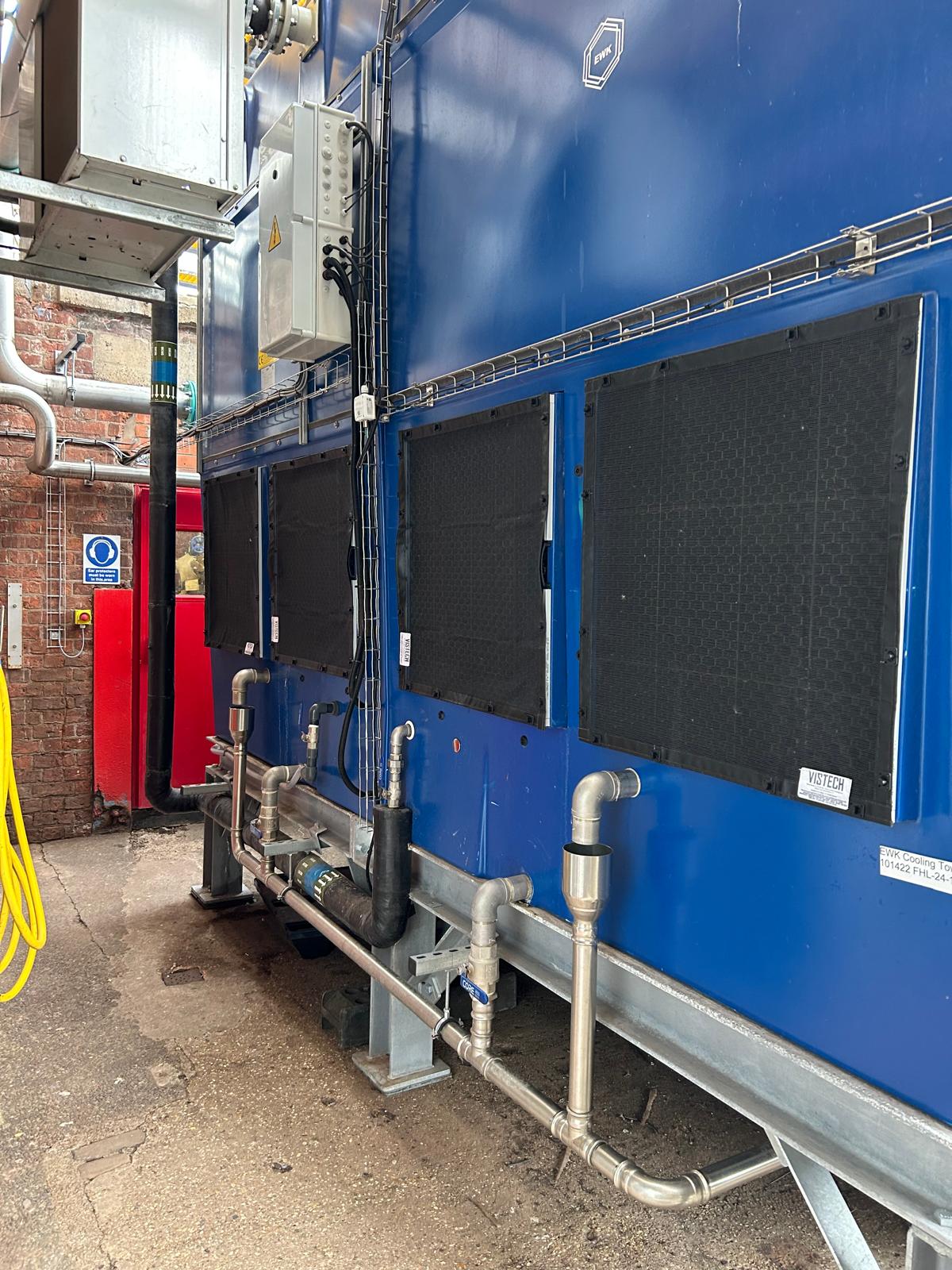
GRP Moulded Construction Towers
- Inherently corrosion-resistant GRP structure
- No steel basin or casing to perforate
- Minimal reliance on protective coatings
- Long-term structural integrity and reduced maintenance
Where corrosion is already evident, repair strategies often address symptoms rather than root cause.
Transitioning to GRP moulded construction removes the primary failure mechanism entirely, providing a more predictable and lower-risk long-term solution.