
The latest Office for National Statistics (ONS) analysis on the impact of higher energy costs on UK businesses shows a clear and widening divide across manufacturing sectors. Industries with strong pricing power particularly food and beverage have largely been able to pass on higher energy costs and remain profitable. Meanwhile, energy-intensive sectors such as metals, paper and chemicals are seeing output fall sharply, constrained by global competition where energy is materially cheaper.
For UK manufacturers, this isn’t just an economic insight. It’s a strategic warning. Some sectors still have capital to invest. Others must now engineer efficiency into their operations if they are to remain viable at all.
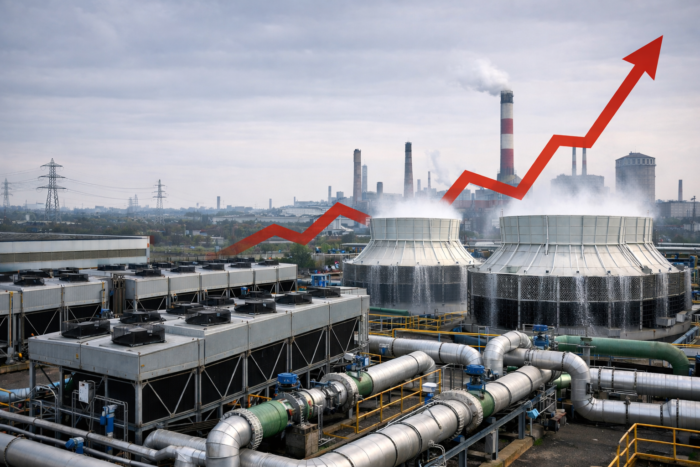
The Energy Cost Backdrop: Why This Isn’t a Short-Term Spike
According to the ONS article on the impact of higher energy costs on UK businesses between 2021 and 2024, non-domestic electricity and gas prices rose dramatically following the pandemic, the war in Ukraine and volatility in global gas markets. UK electricity prices were particularly exposed because wholesale electricity pricing is closely linked to gas-fired generation, meaning gas often sets the marginal price of power.
As the ONS notes, while prices have eased from their absolute peak, they remain structurally higher than pre-2021 levels and importanly higher than many international competitors. This is not a temporary anomaly that manufacturers can simply “wait out”.
Our Vistech MD has noted that now:
“For energy-intensive production environments, energy has shifted from being a controllable or often overlooked overhead to a core competitiveness variable.”
Sectoral Divide: Who Can Pass on Costs and Who Can’t?
One of the clearest findings in the ONS data is that food and beverage manufacturing has remained comparatively resilient. Demand is relatively inelastic, supply chains are domestic-facing, and price increases whilst unpopular can be passed through without collapsing demand.
The practical result is cash flow resilience meaning that most food and drink manufacturers have been able to continue investing in plant upgrades, utilities and infrastructure. This aligns with what we are seeing though interactions in all sectors: continued demand for cooling towers, adiabatic coolers and broader process-cooling upgrades, often focused on efficiency and resilience rather than pure capacity.
Where sites are investing, the conversation is increasingly about whole-life cost, water and energy trade-offs, and whether advanced control philosophies, SMART Technology with selective energy & water bias can reduce exposure to electricity price volatility while staying within tightening environmental constraints. (See our guide to adiabatic coolers explained.)
Metals, Paper and Chemicals: Exposed to Global Competition
In contrast, the ONS highlights that energy-intensive sectors such as basic metals, paper manufacturing and chemicals have experienced production output falls of around one-third since 2021 and that in some cases reaching levels not seen since 1990…..
The issue is not demand alone. It is competitiveness.
These sectors typically operate in global commodity markets where prices are set internationally. UK producers cannot simply raise prices to offset energy costs when competitors in the US, Middle East or parts of Europe are operating with significantly lower electricity and gas prices.
This creates a brutal squeeze:
- Energy is a large proportion of production cost
- Pricing power for these manufacturers is weak or non-existent
- Profit Margins erode quickly
- Capital investment is deferred…. precisely when it is most needed
The conclusion is unavoidable: cost structures must change, or capacity will continue to exit the UK.
Efficiency Is No Longer Optional – It’s Existential
For sectors under pressure, the ONS data reinforces a reality many plant managers already feel daily: survival depends on engineering-led efficiency, not incremental savings.
In practical terms, that means revisiting:
- How heat is rejected and reused
- Whether cooling systems are correctly sized for current loads
- How much electricity is being consumed to move, cool or reject heat that could be handled more efficiently
We frequently find ageing and legacy cooling systems operating far from their design duty with oversized fans, fixed-speed pumps, and unnecessary chiller runtime. All of which is quietly but significantly compounding energy costs. In these environments, even modest efficiency gains can be the difference between marginal profitability and sustained losses.
This is where a structured technical design review becomes critical. A proper FEED-level assessment, rather than a like-for-like replacement mindset, allows manufacturers to quantify where energy is being lost and which interventions will deliver real payback. (See Vistech Technical Services.)
Cooling Strategy as a Competitive Lever
Cooling is rarely the headline issue in board-level discussions yet we have seen countless examples where it should be. In many process industries, cooling systems are among the largest single consumers of electricity outside the core process itself.
Recently one of our solutions consultants met a client who explained:
“that despite their company having over 120+ global facilities worldwide that their UK site accounts for 80% of the global water costs”
The question is no longer “what’s the cheapest piece of equipment?” but “what process configuration minimises exposure to long-term energy price rises whilst staying compliant and reliable?” Our overview of cooling towers and evaporative systems explores these trade-offs in more detail.
Next Steps for Energy-Exposed Manufacturers
- Quantify energy as a percentage of unit production cost.
- Review cooling system and process design, not just the equipment.
- Assess part-load and seasonal operation, not just peak design.
- Commission a technical FEED study rather than defaulting to replacement.
- Model whole-life cost, not just CAPEX.
- Factor in maintenance, water treatment and compliance.
- Compare CAPEX vs lease options where cash preservation matters (see Lease vs CAPEX funding).
- Treat energy reduction as a strategic, not operational, objective.
Citation
Office for National Statistics (ONS), released 19 May 2025, ONS website, article, The impact of higher
energy costs on UK businesses: 2021 to 2024